Wednesday, July 17, 2013

Blogging toward Sunday

The third of our 6-week sermon series on nature allows us an opportunity to 
consider the importance of trees in Scripture. 

Garden of Gethsemane via Wikimedia Commons
As you prepare for worship, slowly and prayerfully read Psalm 1 and then consider the following:
  1. Who are "like trees" in this text? 
  2. Where are they planted? 
  3. What is their function?
Turn to Genesis 1. Read through the chapter until you find a reference to trees. In what verse do you find the word "trees" for the first time? Read Deuteronomy 20:19-20. What do you learn about trees in this text?

Now turn to Luke 13:6-9:
  1. Read through the passage once. 
  2. While imagining you are the tree in the story, read it again. 
  3. Finally, meditate upon this question: Today, if Jesus came digging around your "soil," what evidence of fruit-bearing would he find?

I pray you are having a wonderful week, keeping dry when the rains pour, and enjoying the sun when it shines!


Blessings,
Glenda

Monday, July 8, 2013

Blogging toward Sunday

The second of our 6-week sermon series on nature allows us an opportunity to consider the importance of mountains in Scripture. 

As you prepare for worship, read the following texts: Exodus 3:1-12: 19:16-20 & Matt. 4:23-5:2a. Then meditate on the mountains pictured below. Finally, consider how mountains (either physically or spiritually) have played a role in your faith journey.

Mount Sinai [All images via Wikimedia Commons]


From Mount of Beatitudes with a view of the Sea of Galilee

Garden of Gethsemane at the foot of the Mount of Olives


As always, I look forward to worshiping with you.
Shalom,
Glenda

Monday, July 1, 2013

Blogging toward Sunday

Image of The Sea of Galilee via Wikimedia Commons

Sunday we begin a six-week sermon series on Nature. We will consider images and/or stories of water, mountains, trees, birds, animals and the overall message creation speaks to all who have eyes to see and ears to hear. In readiness, instead of the usual Blog contents, I will provide mostly pictures and poetry, with a few key Scripture verses to help you along the way.  Hopefully, you will journey through the next 6 weeks with an "eye" toward God in nature.

Key Texts: Genesis 1 and Psalm 8. May these passages give you a starting place to ponder the wonder of God's creation, in general, and the theme of water found in God's Word, in particular.

The following is a Water Prayer that recognizes our misuse of this life-giving resource. May it be our prayer this week:


Loving God,
whose son Jesus Christ
called all who were thirsty
to come to him, believe and drink,
Look in mercy
on your people living in dry lands, and
struggling to survive without access to
safe drinking water.
Forgive our selfishness in life and our
misuse of
our natural resources.
We commit ourselves to value and care
for your gifts to us.
May rivers of living water
and practical compassion for all who
suffer flow out from our hearts.
Refreshed by your Spirit,
and following in the way of Jesus
Christ,
We will continue to serve you
in the people and creation entrusted to
our care.
Amen.

(Adapted from a prayer by Rev Canon Paul Robertson 2004)


May the Lord bless you this 4th of July week. I look forward to our Sunday worship, especially as we gather around the waters of our baptism to confess our sins, and around the Table of our Lord to partake of  Holy Communion.

Shalom,
Glenda

Wednesday, June 26, 2013

Blogging toward Sunday

The Lectionary readings for Sunday, June 30 include Psalm 77:1-2,11-20 and Galatians 5:1,13-25. First read the psalm, which happens to include a hymn recalling the events of the exodus.

Image via churchart.com


Now turn your attention to Paul's letter to the church in Galatia. Read through the text at least twice. Then consider the following:
  1. In this portion of the letter, what grabs your attention?
  2. What does Paul write concerning freedom?
  3. What does Paul say about the law?
  4. What single commandment sums up the law?
  5. Verse 16 begins, "Live by the Spirit..." Literally, this means to "walk by the Spirit." What does "walking by the Spirit" mean to you?
  6. Note the list of vices mentioned by Paul.
  7. Note the list of virtues.
On your journey toward Sunday, may you find ways to love your neighbor as yourself. As always, I look forward to our worship time together.

Shalom,
Glenda

Thursday, June 20, 2013

Blogging toward Sunday

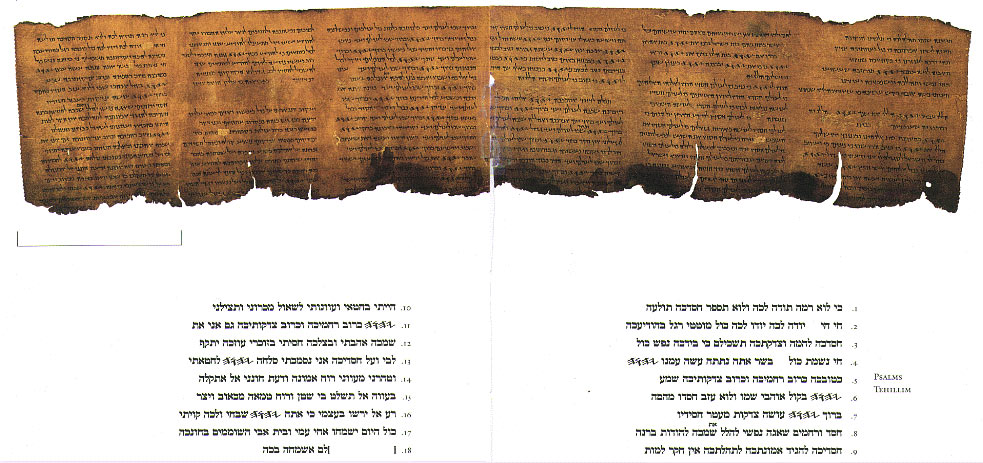
Image of Psalms from Dead Sea Scrolls via Wikimedia Commons

On your journey toward Sunday, first read Paul's writing to the church in Galatia from Galatians 3:23-29. In the last verse Paul writes, "If you belong to Christ, then you are Abraham's offspring, heirs according to the promise." As heirs of Abraham and as Christians, we are particularly blessed that the Hebrew Scriptures are included in our own sacred texts. In light of this, the sermon for Sunday will focus on the Jewish "songbook," if you will, specifically Psalm 42 and 43.

The Psalms, or the Psalter, is a collection of prayers and songs composed and collected throughout the history of the people of Israel. While these poetic songs include songs of thanksgiving and praise, there are also a large selection of songs of lament or prayers for help. In some cases it is an individual who is crying out to God. In others, the entire community is responding to overwhelming distress by pleading to God.

Since Psalm 42 and 43 are actually only one psalm, we will be considering both readings. Through the spiritual practice of Lectio Divina, slowly and prayerfully read Psalm 42-43. What do you notice from the reading? Does something specific get your attention? Now, try to place yourself in the story by imagining that you are one of the people of Israel who has been in Babylonian captivity. Read the text again, slowly and prayerfully. What new learning do you notice this time? Finally, read the passage one last time, but this time pay particular attention to metaphors and images of water. You may wish to close your time of study and reading by saying The Lord's Prayer or Psalm 23 either silently or aloud.

As always, I look forward to worshiping with you on Sunday. May God bless you and those you love.

Shalom,
Glenda


Wednesday, June 12, 2013

Blogging toward Sunday

The Apostle Paul by Rembrandt; via Wikimedia Commons
In preparation for worship read Galatians 2:11-21. Actually, verses 11-14 are not included in the Lectionary texts for Sunday, but including them will help you better understand the "big picture." As you reflect on the reading, consider the following:
  1. What is the issue between Paul and Peter?
  2. How does Paul react?
  3. Regarding verses 15-21, what is Paul's argument?
  4. What strikes you as most interesting about this passage of Scripture?
During my study of Galatians 2:15-21, the sentence that jumps out for me is found in verse 20: "It is no longer I who live, but it is Christ who lives in me." As you journey toward Sunday, ponder this one question: "How does my life demonstrate that Christ lives in me?"
Blessings,
Glenda

Thursday, June 6, 2013

Blogging toward Sunday


Image via Wikimedia Commons
The Lectionary readings for Sunday include Psalm 146 and Galatians 1:11-24. In order to get a clearer perspective on the situation in the church of Galatia, it would be helpful to read the entire chapter.

After you have prayerfully read the text, consider the following:
  1. What is the tone of the beginning of the letter?
  2. How does the tone change in verse 6?
  3. What is the issue Paul is addressing?
  4. In response to the challenges before him, Paul tells the story of his own calling in a way that highlights God's initiative. 
No doubt, Paul was a man with a strong personality. Even today there are people who are less than fond of Paul, thinking of him as arrogant and self-righteous. As you journey toward Sunday, reflect on your own feelings toward Paul. What do you like about him? What do you dislike? Have you ever given him much thought at all?

In his book, Paul for Everyone: Galatians and Thessalonians, Tom Wright has this to say:
We are all different, and as the old Puritan said, God does not break all hearts in the same way. But it is a central strand of most Christian living that everybody needs, from time to time, to wrestle privately with God and his will. It is necessary, too, that church leaders should be seen to be telling their own story truly. For Paul, his story was closely linked with  God's unveiling of Jesus as the true messiah, the crucified and risen Lord of the world. His life, his vocation, his whole identity was stamped with the gospel message.
May God bless you this week. As always, I look forward to seeing you at the Celtic Worship Service Saturday at 5 p.m. and at worship on Sunday.

Shalom,
Glenda