 |
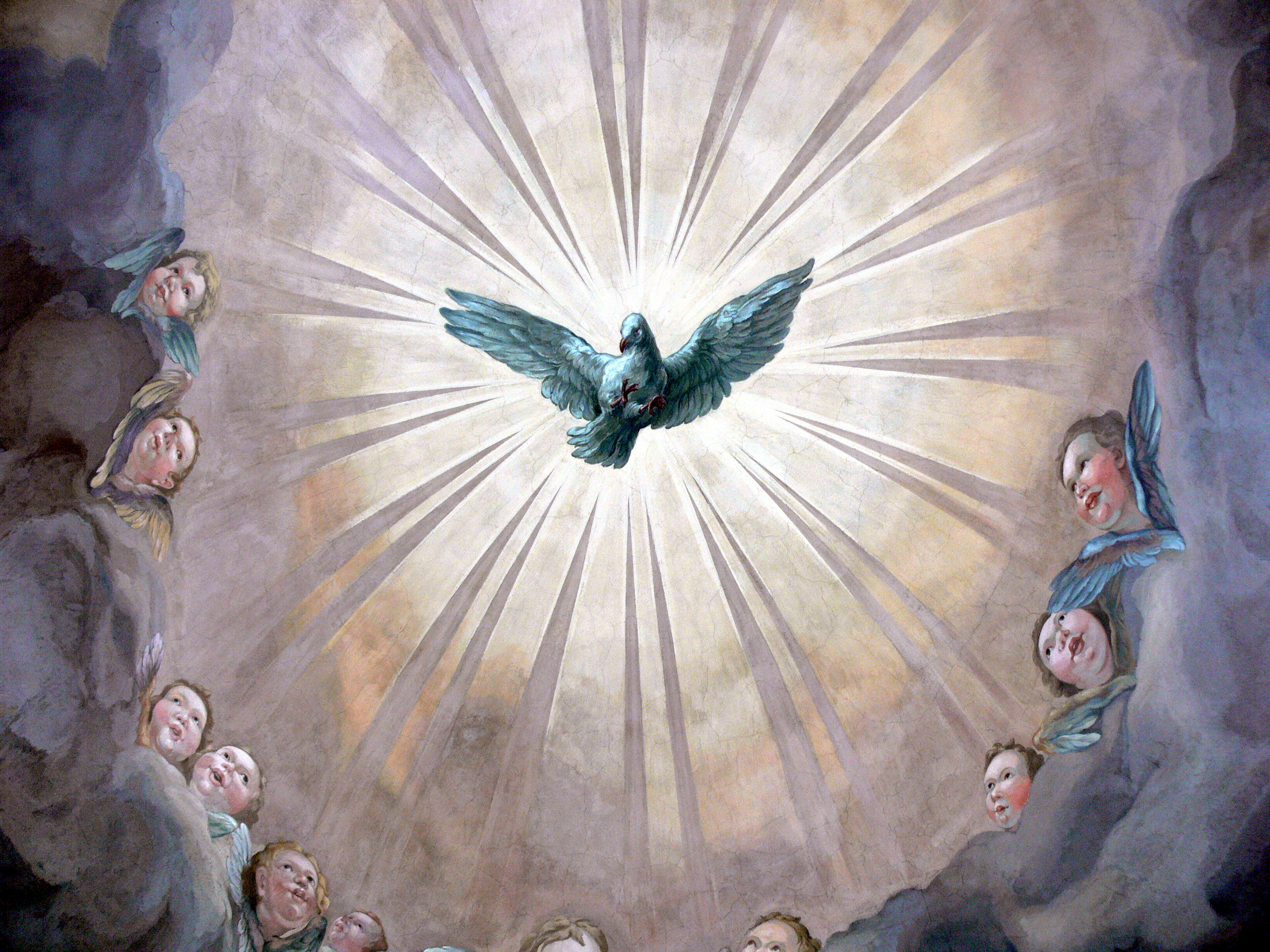
| "Dove: Holy Spirit" by Wolfgang Sauber via Wikimedia Commons
In the life of the church, this Sunday carries great importance. It is the Day of Pentecost, which marks the coming of the Holy Spirit and the birthday of the church. As you prepare for worship, meditate on Acts 2:1-21 and then consider the following:
The following is a poem penned by Malcolm Guite entitled, simply, "Pentecost." May it bless you on your journey toward Sunday.
Today we feel
the wind beneath our wings
Today the hidden fountain flows and plays
Today the church draws breath at last and sings
As every flame becomes a Tongue of praise.
This is the feast of fire, air, and water
Poured out and breathed and kindled into earth.
The earth herself awakens to her maker
And is translated out of death to birth.
The right words come today in their right order
And every word spells freedom and release
Today the gospel crosses every border
All tongues are loosened by the Prince of Peace
Today the lost are found in His translation.
Whose mother-tongue is Love, in every nation.
Grace & Peace,
Glenda
|
Thursday, May 12, 2016
Blogging toward Sunday

Wednesday, May 4, 2016
Blogging toward Sunday
 |
| "St. Paul the Apostle" via Wikimedia Commons |
So come, let us gather, and let us worship for we are believers in the Most High God.
Grace & Peace,
Glenda
Monday, May 2, 2016
How Far Will You Travel?
Sermon for May 1, 2016
Psalm 67 and Acts 16:9-15
 |
| "Baptism of Lydia" via Wikimedia Commons |
(Note: The first part of sermon is a monologue.)
[Put on head scarf] Thank you for allowing me to visit this morning. I have really been looking forward to traveling here to share my story with you. My name is Lydia. Although I am originally from the city of Thyatira, most of my adult life was spent in Philippi. Likely you know something about Philippi since later Paul would write a letter addressed to the house church that met there—a letter that would become part of your New Testament canon. Philippi was a leading city of the district of Macedonia and a Roman colony. It was founded in 356 BCE by Philip of Macedon—the father of Alexander the Great. Philippi was more of a village than a city in those days, though, until it was “rediscovered” by Emperor Augustus some 300 years later. He chose Philippi as a retirement community for retired army officers. By the time I arrived, the city had a population of around 15,000 people—a little less than your own city of Colonial Heights.
I came to the Philippi because I wanted independence. I wanted a new life. I learned the skill of dyeing fabrics from my mother, who was incredibly creative and talented. She could do anything she set her mind to do. When I heard of the vast opportunities available in Philippi, I traveled there to start my own business. Maybe that seems a lofty goal to you—since I am a woman. But somehow I knew in my heart and soul Philippi was the place for me. And I was right.
With a lot of hard work and a lot of prayer—my business took off. Purple cloth was my specialty. I, along with some family members and other women who worked for me—extracted the purple dye from murex shell fish. It was hard work—back-breaking work—and it was a trade considered “unclean.” Still, it was a lucrative business because purple cloth was a luxury item only the wealthy could afford. That’s how I was able to be in charge of my own household. That’s how I was able to have my own property—instead of be someone’s property.
In business, I was successful but I knew that my success was not my own—I knew that God was the source of it. God put the notion in my head to travel to Philippi. God helped me get my business going. God helped me choose good workers who would help things go smoothly. Even though I was not born a Jew, God put a Jewish woman in my life who shared her faith story with me. Through her I came to know and love God—not one of the myriad other gods the people in Philippi worshiped—but Yahweh—the God of Abraham, Isaac, and Jacob.
Jewish law required 10 Jewish men to make a synagogue. But in the Greek city of Philippi there were not 10 Jewish men to be found. Greeks, however, experienced places of “living water” as holy. So since we could not gather in a synagogue, as was the custom of the Jews, I, along with other women believers, gathered by the river to pray on the Sabbath. There we found comfort. There we found strength. There we found community. But in my heart of hearts, I yearned for something for which I had no name…I yearned for something more...
One Sabbath when we were at the river’s edge, a man came along—he and some others. At first I thought they were just looking for a place to pray, too, but then they actually sat down and started talking to us about God. Jewish men—talking to mostly Greek women—well that was unheard of. Paul, the apparent leader of the group, began to tell us what had brought him to Philippi. He told of a vision he had of a man from Macedonia pleading for help. Then Paul shared his own story of faith. He once persecuted people who believed in Jesus. “Who is Jesus?” I asked. “Jesus,” Paul responded, “Jesus is the Messiah, the Righteous One, the Son of God who came into the world to set us free—free from fear—free from tyranny—free from all that keeps us bound to darkness and despair.” Paul went on to tell about his conversion on the road to Damascus. He told us about God’s own Spirit that came to live in the heart of every baptized believer. In that moment I knew that God had once again provided what was most needed—God had sent a witness to travel many miles for me—for us. Eagerly I asked to be baptized—me and my entire household. Oh what a joyous day—when Christ washed my sins away—there in the river where I had come to pray.
Life for me was forever changed. I implored Paul and his traveling companions to come and stay in my home while they were in Philippi. It was the least I could do after they had traveled so far to share such good news: Good news of the love of Christ. Good news of the power of the Spirit to transform lives. Good news to save people lost in darkness and sin. In the days that followed I continued to learn from Paul’s teachings. Others learned about these men of God who were staying in my home. People came to hear and many believed. Eventually, my house became a house of prayer for Christians throughout the area.Together we began to learn about becoming believers in community—we devoted ourselves to the apostle’s teaching and fellowship and the breaking of bread and prayer. We praised God because day by day the Lord added to our numbers those who were being saved.
I have traveled here today to share my story with you. We, who go by the name “Christian,” have a story to tell. I hope you, too, will be a messenger of the good news so that more people may be added to God’s family here on earth. [End monologue by removing scarf.]
The story of Lydia’s conversion—what a wonderful story. Truth be told we do not know much about her. We know she was a successful business woman who was probably a non-Jew who had somehow been drawn to the Jewish faith. We know she was a person of means because she had a home large enough to house several visitors. We imagine she had some influence in the community because she had contact with the elite. We do not know for sure if the Philippian Letter Paul eventually wrote was sent to a church that met in Lydia’s house—but it seems likely.
The story of Lydia’s conversion has captured the imagination of many down through the ages. Allow me to share a poem that resulted from such pondering. Written by Holly S. Morrison, it is entitled simply, “Lydia.”
The purple wouldn't wash off. Still,
Stubborn and savvy as ever, she planned her path
past market stalls, walled gardens, city gates
past the buzzing, glittering temple,
to a place outside: a praying place.
She went down to that dirty river and
prayed for the soft golden skin of her youth,
the bangles jangling on slender wrists,
the traceries of henna,
painted lines of prettiness and praise--
She prayed with hardened hands for better days.
Stubborn and savvy as ever, she planned her path
past market stalls, walled gardens, city gates
past the buzzing, glittering temple,
to a place outside: a praying place.
She went down to that dirty river and
prayed for the soft golden skin of her youth,
the bangles jangling on slender wrists,
the traceries of henna,
painted lines of prettiness and praise--
She prayed with hardened hands for better days.
She went down to that rough-edged river and
prayed for the soft smiles of all her servants,
so deft and deferent, so smooth and skilled
she could not quite learn whether she'd
earned—or merely bought—their trust--
She prayed with oil-rubbed skin and the taste of dust.
prayed for the soft smiles of all her servants,
so deft and deferent, so smooth and skilled
she could not quite learn whether she'd
earned—or merely bought—their trust--
She prayed with oil-rubbed skin and the taste of dust.
She went down to that deep old river,
where other praying women met her, held her, heard her.
She prayed for the soft hollow of her soul,
the empty ache under the fine fabrics of her trade,
like a weeping burn, all bandage-bound.
She prayed at the river, where the women gathered.
She prayed at the river, where men seldom wandered.
She prayed at the river till a stranger prayed with her,
and the purple folds of her heart fell open
and the stains of her trade no longer concerned her
and she opened her house to apostles and pilgrims
there at the river,
there at the fringes,
where the Spirit weaves through
and the floods bring fertile ground.
where other praying women met her, held her, heard her.
She prayed for the soft hollow of her soul,
the empty ache under the fine fabrics of her trade,
like a weeping burn, all bandage-bound.
She prayed at the river, where the women gathered.
She prayed at the river, where men seldom wandered.
She prayed at the river till a stranger prayed with her,
and the purple folds of her heart fell open
and the stains of her trade no longer concerned her
and she opened her house to apostles and pilgrims
there at the river,
there at the fringes,
where the Spirit weaves through
and the floods bring fertile ground.
By the river’s edge, Lydia met Paul—Paul who traveled thousands of miles to share the good news. As you look back over your own life, how far have you traveled? Have you gone out of your way to tell someone about Jesus? Have you used your talents and resources to spread the gospel? In the days and weeks and months and years ahead, how far will you travel? You may have an opportunity to travel across the seas to a faraway country to tell someone about Jesus. That would be incredible. But if you do not, there is a mission field right outside our doors. In our own community, there are people who do not know Jesus. There are people who are unaware of their desperate need for the transforming love of Christ. There are people who claim to be spiritual but not religious. Some people have lost interest in institutionalized religion. Others have been hurt by Christians and have no intention of ever darkening a church door again. Regardless, we have an obligation to them. They are children of God and we have been commissioned by Christ himself, “Go therefore and make disciples of all the nations, baptizing them in the name of the Father and the Son and of the Holy Spirit, and teaching them to obey everything that I have commanded you. And remember, I am with you always, to the end of the age.”[i]
We are all called to go and share the good news of Jesus Christ. But we never go alone. Christ’s Spirit goes ahead of us to prepare the way—to open hearts to listen just as Lydia’s heart was opened. She was ready, willing, and eager to hear the story Paul came to share. We all have a story—a story about the difference Christ has made in our lives. Why do we tell it so seldom? As a church, is our only evangelism strategy to wait for them to come to us? Are we glued to our pews? Have we been struck dumb? We can talk about the nonsense of the world ad nauseum. Why do we resist talking about something as important as our faith in Christ our Lord? Our love of God the Father? Our dependence on the Holy Spirit?
Over the summer we will have many opportunities in small groups as well as in worship to continue this conversation. We will speak often of that dirty E-word: Evangelism. It is my prayer that God will bless us as we learn new ways to share our story. But we won’t stop here. We will learn and we will go and we will do. Because there are still people like Lydia who are waiting—waiting for good news. May God allow us to be the ones who bring it!
Thursday, April 28, 2016
Blogging toward Sunday
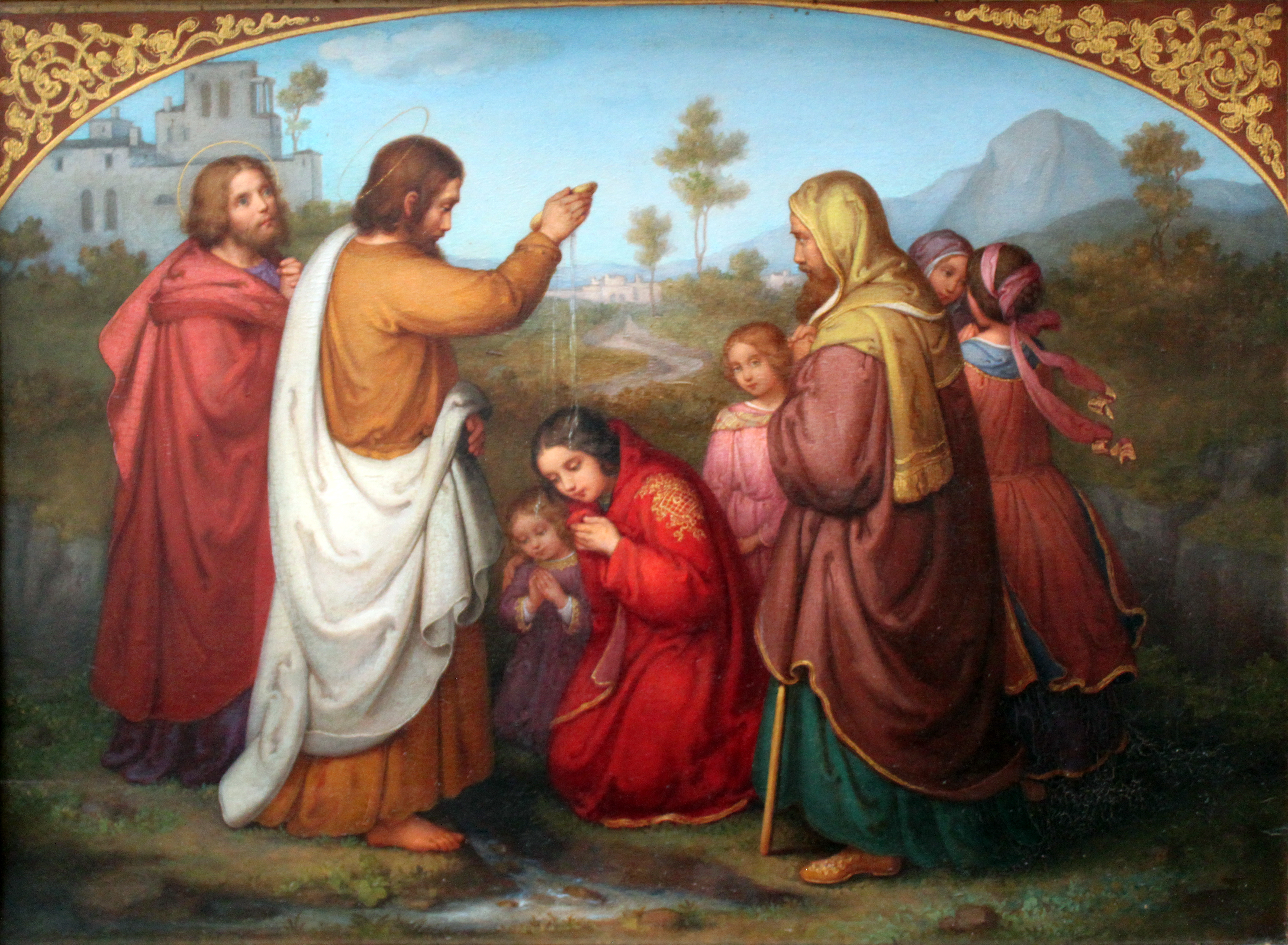 |
| "Baptism of Lydia" via Wikimedia Commons |
In preparation for worship this Sunday, using the spiritual discipline of lectio divina, read Acts 16:9-15. Herein, you will find the beginning of Paul's second missionary journey that will last three years and cover about 2000 miles. Included in this journey will be stops in Greek cities to which he will eventually address letters: Philippi, Thessalonica, Corinth, and Ephesus.
After prayerfully contemplating the text, consider the following:
- What prompts Paul to travel to Macedonia?
- What did Paul sense God wanted him to do?
- How is Philippi described in this text?
- What do Paul and his companions do on the Sabbath day?
- Who is Lydia?
As always, I look forward to worshiping with you this Sunday. Until that time, may God bless your comings and your goings.
Grace & Peace,
Glenda
Thursday, April 21, 2016
Blogging toward Sunday

This Sunday we gather to worship God with our 2nd Annual Earth Day Celebration. In order to prepare for worship, read Psalm 148 and Acts 11:1-18. Then consider the following:
- In the psalm, who or what is called to praise God?
- Take a moment to read Psalm 148 again but this time do so out loud. How does reading this psalm aloud make you feel?
- In the reading from Acts, who are the key players?
- What does God use to teach Peter an important lesson?
- For whom is the lesson, ultimately?
In my readings this week, I happened upon a poem written by Namkhai Norbu. I hope you enjoy it as much as I do.
Animals as Teachers
As a bee seeks nectar
from all kinds of flowers,
seek teachings everywhere;
like a deer that finds
a quiet place to graze,
seek seclusion to digest
all you have gathered.
Like a madman
beyond all limits,
go wherever you please,
and live like a lion,
completely free of all fear.
As you continue through the week, be in prayer for all of God's people and all of God's creatures throughout the lands. In addition, give thanks for those creatures that bring you joy, especially your pets.
Blessings,
Glenda
Monday, April 27, 2015
Blogging through May
Blogging through May
 |
| "Pentecost" via Google Images |
In preparation for worship during the month of May, I hope you will set aside time to reflect on the Scripture readings for each Sunday. Personally, I am really looking forward to our Pentecost worship service May 24th. I hope you are, too!
For May 3, 2015: Using the
spiritual practice of Lectio Divina,
slowly and prayerfully read John 15:1-8. After a moment of silence, reflect on
what touches you most about this passage. Read through the text a second time, followed
by a moment of silence. Then ask yourself these questions: "Through this reading, what
is God revealing to me about my own spiritual life? Is a change needed? If
so, what?"
For May 10, 2015: Read John
15:9-17 at least two times, and reflect on what speaks to you from this passage
of Scripture. Then consider the following:
- How do we abide in the Father’s love?
- What is Jesus’ commandment to his followers?
- How is God’s grace made evident in this text?
In preparation for worship May 17, 2015: Read Acts
1:15-17, 21-26 and John 17:6-19. Keeping in mind that this is the Sunday before
we celebrate Pentecost, reflect on the following:
- From Acts, after Christ’s ascension, what “business” do the disciples take care of and how do they do it?
- From John, in this prayer to his Abba Father, Jesus prays for his disciples. What requests does he make?
For May 24, 2015: Read Ezekiel
37:1-14 and Acts 2:1-21. This Sunday we celebrate Pentecost, the Birthday of
the Church. As you prepare for worship, consider how you have witnessed the
Holy Spirit working in your life, in the life of others, in the life of CHPC.
Then, in a time of prayer and thanksgiving, ask God for eyes to see the Spirit
working in ways, in people, and in places you might be overlooking.
For May 31, 2015: Read Psalm 29
and John 16:12-15. On this day the church celebrates Trinity Sunday.
- When you consider the doctrine of the Trinity, how do you imagine God as God the Father, God the Son, and God the Holy Spirit?
- How might you explain the Triune nature of God to a child?
- Do you find yourself more comfortable with one person of the Trinity? If so, why?
As always, I look forward to being with you each Sunday to worship our Great and Holy God!
Shalom,
Glenda
Sunday, April 12, 2015
Blogging through April
_-_East_wall%2C_right_(Harrowing_of_Hell)_03.jpg) |
| via Wikimedia Commons |
As
we journey through the Season of Easter, I hope that you will set aside some
time to prepare for worship each week by reflecting on the appropriate texts
and instructions that follow.
April
5, 2015
The
Season of Lent has passed and it is time to celebrate! In preparation for worship, read Isaiah 25:6-9 and Mark 16:1-8.
Likely you know in the liturgical calendar, Easter is not just one day—it’s a season—and
the Season of Easter is 50 days long. As you consider this most wondrous time
of the church year, what you might do in the next 50 days to keep the joy of
the season alive in your heart, mind, and soul?
April
12, 2015
This marks
our first celebration of Holy Humor Sunday. Take a moment to reflect on
Ecclesiastes 3:1-4 and Psalm 2 and then consider the following:
1.
What
do you learn about laughter from these texts?
2.
How
many other verses can you find in the Bible that concern joy and laughter?
3.
How
important is laughter in your life?
4.
Do
you feel God calling you deeper joy in your faith journey? If so, how might you
act upon this calling?
April 19,
2015
At a
recent day retreat, our Music Director, Louise Daniel, provided an opportunity
for us to consider that many of the songs we sing come directly from Scripture.
Sunday, we will continue along this line of thinking with the theme for morning
worship, “Sing the Word.” Louise will lead us in singing some wonderful music
and I will preach a short homily. Come prepared to sing! In addition, this
would be a perfect time to flip through our new hymnal and note your favorite
hymns. Write them down and share your list with me so that we might sing them in
upcoming services.
April 26,
2015
As part of
CHPC’s goal to become designated as an Earth Care Congregation through the
Presbyterian Church (USA), we will gather to celebrate Earth Day on April 26th.
The church will be filled with wonders of God’s creation and we will reflect in
particular on how we eat as it impacts God’s creation in the face of a changing
climate. In preparation for worship, read Matthew 14:13-21. In our day and
time, do you think there can be enough food for everyone? If so, how might we
might help in this endeavor? Then read Luke 24:36-43 and consider why Jesus
asked for food to eat in this passage.
Each and
every Sunday, I look forward to worshiping with you but during the Season of
Easter, it is even more joyful to sing, pray, and celebrate together as a
worshiping community. And this year, April is filled with so many wonderful worship opportunities designed to continue the celebration. Make plans to attend each
service and bring along a friend.
Shalom,
Glenda
Subscribe to:
Posts (Atom)