Tuesday, January 3, 2012

Blogging toward Sunday

The Scripture readings for Baptism of the Lord Sunday are Genesis 1:1-5 and Mark 1:4-11.
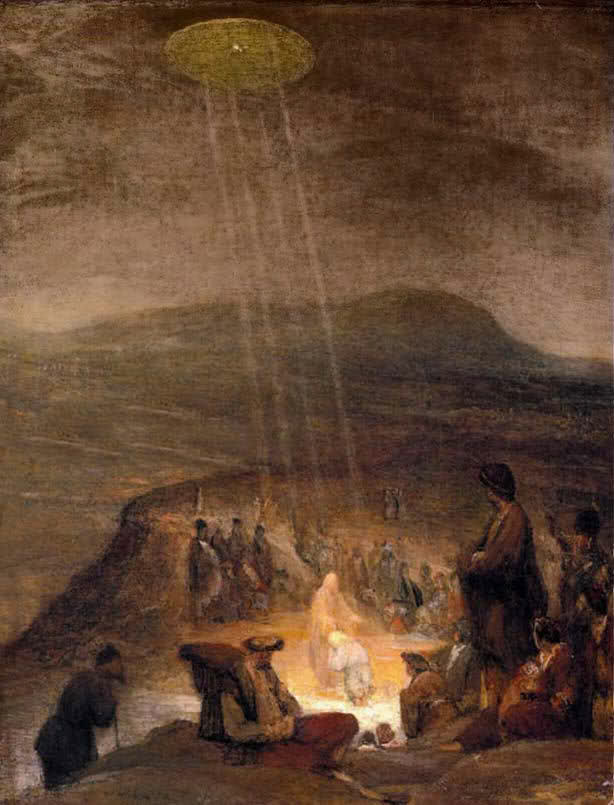
Wikimedia Commons Image
Our reading from Genesis takes us to the beginning of creation when, at the voice of God, order comes forth out of chaos. A new world is created and a new day begins. Fast-forward through time and we are once again by the water's edge. This time there is a man crying out in the wilderness, proclaiming a baptism of repentence for the forgiveness of sins. John the Baptist says that one more powerful than himself is coming. "I am not worthy to stoop down and untie the thong of his sandals. I have baptized you with water; but he will baptize you with the Holy Spirit." Then, while the words still linger in the air over John's head, Jesus appears on the banks of the Jordan River, as if on cue. And, of all things, he wishes to be baptized. 

So many thoughts may come to mind at the reading of these two lessons.  Consider the following:
  1. What echoes of the Genesis creation account can be heard in the baptism of Jesus account?
  2. Mark provides background for the doctrine of the Trinity. How so?
  3. Water is critical to life. How does flowing water and baptismal waters compare?
  4. When you think of your own baptism, what feelings rise to the surface?
  5. How often are you reminded of your baptism?
  6. What does it mean to you?
On the church calendar, this Sunday marks Baptism of the Lord Sunday. During worship, an opportunity will be provided for each of us to reaffirm the covenant of baptism.  On your journey toward Sunday, prayerfully consider how baptism links you spiritually to God the Father, God the Son, and God the Holy Spirit. Finally, ponder how you might more fully live into your baptism as a transformed child of God.

I hope to see you in worship on Sunday.
Blessings,
Glenda

Monday, December 19, 2011

Blogging toward Sunday

What a wonderful week of worship we have before us:

Christmas Eve Candlelight Service, Saturday at 7 p.m.
Christmas Day Service, Sunday at 11:00 a.m.

Our Gospel reading for Sunday comes from John 1:1-14. Yes, the Word became flesh and lives among us. Whatever days we face, whether they seem bright or dim, still the Light of Christ shines, above us, before us, and within us.

As we journey through this last week of Advent, I offer you a much beloved poem, "Bells on Christmas Day." Henry Wadsworth Longfellow was filled with sorrow at the tragic death of his wife in a fire in 1861. The Civil War broke out the same year, and it seemed this was an additional punishment. Two years later, Longfellow was again saddened to learn that his own son had been seriously wounded in the Army of the Potomac. Sitting down to his desk, one Christmas Day, he heard the church bells ringing. It was in this setting that Longfellow wrote these lines:

I heard the bells on Christmas Day
Their old familiar carols play,
And wild and sweet
The words repeat
Of peace on earth, good will to men!

And thought how, as the day had come
The belfries of all Christendom
Had rolled along
The unbroken song
Of peace on earth, good will to men!

Till, ringing, singing on its way,
The world revolved from night to day,
A voice, a chime,
A chant sublime
Of peace on earth, good will to men!

Then from each black, accursed mouth
The cannon thundered in the South,
And with the sound
The carols drowned
Of peace on earth, good will to men!

It was as if an earthquake rent
The hearth-stones of a continent,
And made forlorn
The households born
Of peace on earth, good will to men!

And in despair I bowed my head;
"There is no peace on earth," I said;
"For hate is strong
And mocks the song
Of peace on earth, good will to men."

Then pealed the bells more loud and deep.
"God is not dead, nor doth he sleep!
The wrong shall fail,
The right prevail,
With peace on earth, good will to men!"
[i]

I look forward to seeing you in worship. Until then, may you be guided by the Light of the Christ Child!

Shalom,
Glenda


[i] Pulpit Helps, 12-92, p. 23.


Tuesday, December 13, 2011

Blogging through Advent

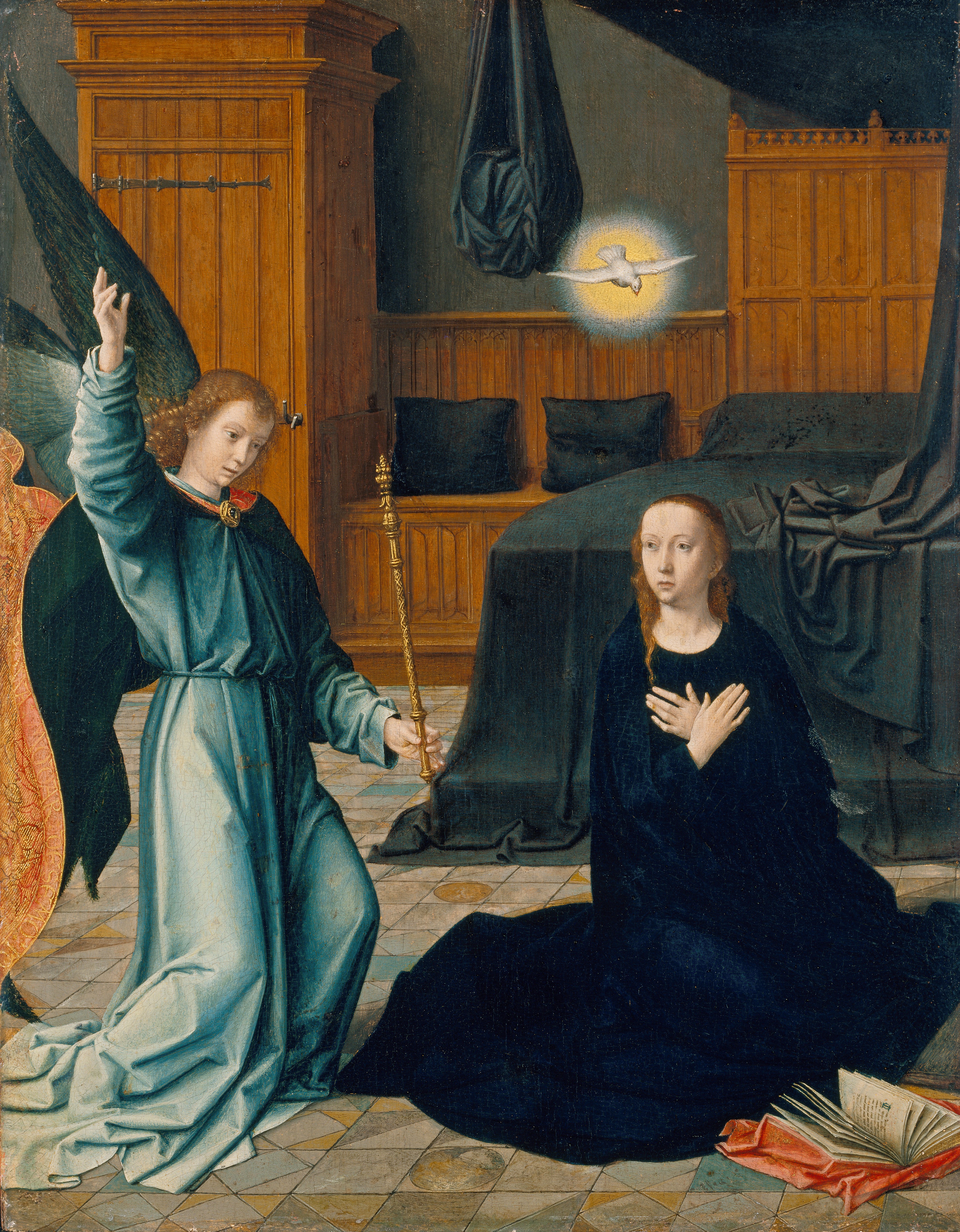
We are approaching the 4th Sunday of Advent and our texts for this Sunday are Psalm 89:1-4, 19-26 and Luke 1:26-38. In the Gospel reading, the angel Gabriel visits Mary and gives her some unexpected news, news that she is to become the mother of a Holy Child, who shall be called Jesus.
Wikimedia Commons Image

In Feasting on the Word, Lewis R. Donelson points out that the angel Gabriel's announcement to Mary of the coming miraculous birth of Jesus is similar to the announcements of other births in Scripture. Read and compare the following birth announcements to our reading for today:

The birth of Ishmael (Genesis 16:7-13)
The birth of Isaac (Genesis 17:1-21; 18:1-15)
The birth of Samson (Judges 13:3-20)
The birth of John the Baptist (Luke 1:8-20)

How are these narratives similar? How are they different?

In the sermon for Sunday, together we will consider Jesus as the Son of Mary. In previous weeks of Advent we have looked at Jesus as the Son of Man and the Son of God. Of course, nowhere in Scripture is Jesus referred to specifically as the "Son of Mary," however, for our purposes we will ponder the human Jesus born of the human Mary. 


When you imagine Mary, what do you see? Is she "flesh and bone" or is she someone ethereal, angel-like, totally unreal? In preparation for Sunday, take time to read through Luke 1:26-38. Sit with the text quietly for a few moments and, perhaps, jot down your thoughts.  Then, prayerfully read through the text again, but this time put yourself in the story. You are Mary. Now, how does the news of Gabriel strike you? What feelings flood over you?

Then consider the following: Who is Mary to you?   Why?   Have you ever wondered why Mary is made so little of in the Protestant tradition but so much of in the Catholic? What might be the downside to either in the extreme?


Mary was chosen by God to do an incredible thing, a new thing, and Mary was faithful to the end. In light of Mary's  obedience and courage, I offer you the following meditation from Maker's Blessing: Prayers and Meditations from the Iona Community.

New Ways
God of our lives
you are always calling us
to follow you into the future,
inviting us to new ventures,
new challenges,
new ways to care,
new ways to touch the hearts of all.

When we are fearful of the unknown,
give us courage.
When we worry
that we are not up to the task,
remind us that you would not call us
if you did not believe in us.

When we get tired,
or feel disappointed
with the way things are going,
remind us
that you can bring change and hope
out of the most difficult situations.

As always, I look forward to seeing you during worship on Sunday.
Shalom,
Glenda

Tuesday, December 6, 2011

Blogging through Advent

During worship on Sunday, December 11th, the
Colonial Heights Presbyterian Church Choir will present
"On Christmas Day: A Choral Celebration of Jesus, the Wonderful One."


On the journey toward Advent, consider these Suggestions for Giving the Present of Presence as offered by Joyce Rupp in Out of the Ordinary: Prayers, Poems, and Reflections for Every Season.

There are two possible ways to be with someone: (a) to be physically present with someone or (b) to be present "in spirit" by deliberately sending prayer, compassionate thoughts, and kind feelings toward another person or group. Either approach could be appropriate for each of the following suggestions.

Be with someone who needs you.
Be with a person who gives you hope.
Be with those who live in terror and fear.
Be with an older person.
Be with someone who has helped you to grow.
Be with one who is in pain.
Be with a war-torn country.
Be with yourself.
Be with someone who has written to you.
Be with a child.
Be with a refugee who is fleeing from harm.
Be with an enemy or someone you dislike.
Be with a farmer losing his or her land.
Be with someone who has terminal illness.
Be with the homeless.
Be with those who suffer from substance abuse.
Be with hungry children.
Be with a coworker.
Be with those whose hope is faint.
Be with world leaders.
Be with someone in your family.
Be with men and women in prison.
Be with someone working for justice.
Be with those who are abused and neglected.
Be with your loved ones.

God of love, you were so generous, sending the presence of your Beloved to dwell among us and to tell us who you are. Encourage me during this Advent season to continue in the sharing of this loving presence through my attentiveness, given in prayer and in deeds. You who dwell within me, remind me often to let go of my busyness and my hurriedness so that I can be with others in a loving way. Convince me that "being" is as important as "doing." Thank you for your strengthening presence. Thank you for being with me. Amen.

I look forward to seeing you in worship.
Shalom,
Glenda

Tuesday, November 29, 2011

Blogging toward Sunday

Lectionary readings for the 2nd Sunday of Advent include Mark 1:1-8 and Isaiah 40:1-11.


The Gospel reading for Sunday is from the prologue of Mark. Rooted in Old Testament prophecy, Jesus is introduced to us through this New Testament prophet, John the Baptist.  He is an interesting character, no doubt, living in the wilderness, wearing strange clothes and eating even stranger things.  This is a man who will not make the cover of GQ magazine; he couldn't care less about such matters. This man of God seems passionate about one thing and one thing only and that is pointing people to the Son of God. 

The Gospel of Mark promises good news and, certainly, the people of 1st Century Palestine could use some good news. They are living under Roman rule. As taxes rise so does the resentment that the Jews feel for those who are in control of their world. Onto the stage walks John the Baptist, who points to the promised Messiah. Yes, the people are desperate for some good news. But will they hear it? In Feasting on the Word, Judy Yates Siker puts it so well: "Clearly, this is not the birth story of Matthew or Luke. No manger scenes derive from this Gospel. Yet, here in the opening lines of Mark we have a "birth story" of sorts. On this second Sunday in Advent, it is good to tell of new beginnings, to tell about a God who breaks into our time with good news. In this Advent season he comes. Perhaps not as might be expected; perhaps not in the time frame desired--but he comes."

Read Isaiah 40:1-11 as well as Mark 1:1-8, then consider the following:
  1. What similarities do you note between the two prophecies?
  2. What differences?
  3. Read the passage from Mark once again, putting yourself in the story as a person standing on the bank of the Jordan River listening in. What is your response to John the Baptist?
  4. Are you drawn to him or do you shy away?
  5. Now slowly read the text, putting yourself in the story as the head of a Jewish family who has been oppressed by the Romans. For whatever reason, by their hands you and your loved ones are suffering. How do John's words strike you now?
  6. How has the Good News of Jesus Christ affected your life?
It is the second Sunday in Advent. As we continue our journey, let us keep watch for the Son of God about whom John the Baptist speaks.

I look forward to seeing you in worship this Sunday and celebrating the Lord's Supper with you. 

Blessings,
Glenda 

Monday, November 21, 2011

Blogging toward Sunday

 Lectionary readings for the 1st Sunday of Advent are Isaiah 64:1-9 and Mark 13:24-37.

In the Gospel of Mark Jesus speaks of the end times, when the Son of Man will appear in the clouds with great power and might.  As you read this passage consider the following:
  1. What does it mean that Jesus calls himself the Son of Man?
  2. What does this title mean to you?
  3. What are some other names for Jesus used throughout Scripture?
  4. What is in a name, anyway?
The Season of Advent provides us an opportunity to meditate upon the first coming of Jesus as a baby in a manger, as well as his second coming, a day for which we still eagerly await.

As believers, it's with great anticipation that we enter the Season of Advent.  The church will be decorated during the “Hanging of the Greens” service this Sunday, and we will begin lighting the Advent candles.  Perhaps we are beginning to think about decorating our homes as well—with greenery, poinsettias, and Christmas trees filled with lights and memories.  As we wait expectantly and prepare for the celebration of the nativity of Jesus, I offer you a heartwarming Advent prayer I happened across some time ago.
 

O God, this Advent season is a time when your light radiates through the world.  Inasmuch as we can, let us be bright for you.

Shine your light through us as though we were pieces of stained-glass window.  Flow through us into others as the warm glow of colors seeps into a church.

Fill us with your light as though we were lighthouses on the shore.  Use us to guide others and to keep them from danger.

Set us aflame with your light as though we were candles, even candles in a storm.  Enable us to burn steadily with your fiery spirit and to push aside all forms of darkness.

Turn us on with your light as though we were Christmas bulbs all connected to one another.  Help us as a community of faith to celebrate the sparkling good news of your Son’s coming birth.

Be present with us, God, throughout the Advent season as we live and worship in our wait for the One who is the world’s light.  Amen.[i]

Happy Advent!
Glenda


[i] The Westminster Collection of Christian Prayers, Glen E. Raisley, pp. 3-4.

Tuesday, November 15, 2011

Blogging toward Sunday

This Sunday, Christ the King Sunday, marks the end of the church year. The readings for worship are Psalm 100 and Matthew 25:31-46.

The people of Israel have a long history with kings.  I Samuel 8 tells the story of the people demanding a king; the nations surrounding them have had a king so they want one too.  The very thought of it displeases Samuel, so he prays to the LORD and the LORD sayes to Samuel, "Listen to the voice of the people in all that they say to you; for they have not rejected you, but they have rejected me from being king over them. Just as they have done to me, from the day I brought them up out of Egypt to this day, forsaking me and serving other gods, so also they are doing to you."  And thus began the ruling of earthly kings over the people.

Fast-forward through time and another King stands before the people, Jesus the Christ. Although the people have been watching for the Messiah's arrival, they fail to recognize him.  He isn't what they expect.  He isn't what they want! What they want is a king to overtake the Roman Empire and return to them the status and power they feel they deserve. This Jesus, he hardly fits the bill. This Jesus, he wants his disciples to be humble, serving others, caring for the needs of the poor and outcast.  What kind of king is that!

One role of a king is to provide direction. Jesus provides direction, but it is as a Shepherd caring for his sheep. To the sheep, he instructs: "Come, you that are blessed by the Father, inherit the kingdom prepared for you..." To the goats he says, "Go, you that are accursed, depart from me into the eternal fire..." To the sheep who listen to his voice, he says, "Do...just as you did it to one of the least of these...you did it to me." Jesus, the Good Shepherd, provides directions--Come! Go! Do! 

In light of Jesus' instruction, caring is crucial—caring for those who are thirsty, hungry, lonely or in need of hospitality. The simple ministry of presence goes a long way in fulfilling Jesus' desires for those who follow him. And, thankfully, the church does have experience in the central mission of hospitality. "Indeed, by the fourth century it was common for congregations to have 'houses of lodging for strangers.' These were the first rudimentary hospitals in the West. Caring for the stranger's ailments was part of their task, but central was their ministry of presence and hospitality."[1]

Jesus’ earthly ministry is about caring for the sheep. Now, as his disciples, that is our ministry as well. 

Questions to Ponder:
1.      How has Christ been the King of my life this year?
2.      As followers of Christ, how should people with power treat those without it?
3.      In the Matthew text, who is surprised (verses 37-39 and verse 44)?

May the Lord bless you and the people you love this week. I look forward to seeing you in worship.

Shalom,
Glenda

[1] Body Theology, James B. Nelson (Louisville, Ky.: Westminster John Knox Press, 1992), p. 136.